
Bloomington, MN
Bloomington Garage Door Guide
Why Bloomington Garage Doors Leak Cold Air
Bloomington's garages date mostly to the 1960s and 70s, and the cold moderate climate here works old weatherstrip loose twice a year. Here's what that actually looks like.
- Licensed & Insured
- Same-Area Service Calls
- Upfront Pricing
Where People Go Wrong
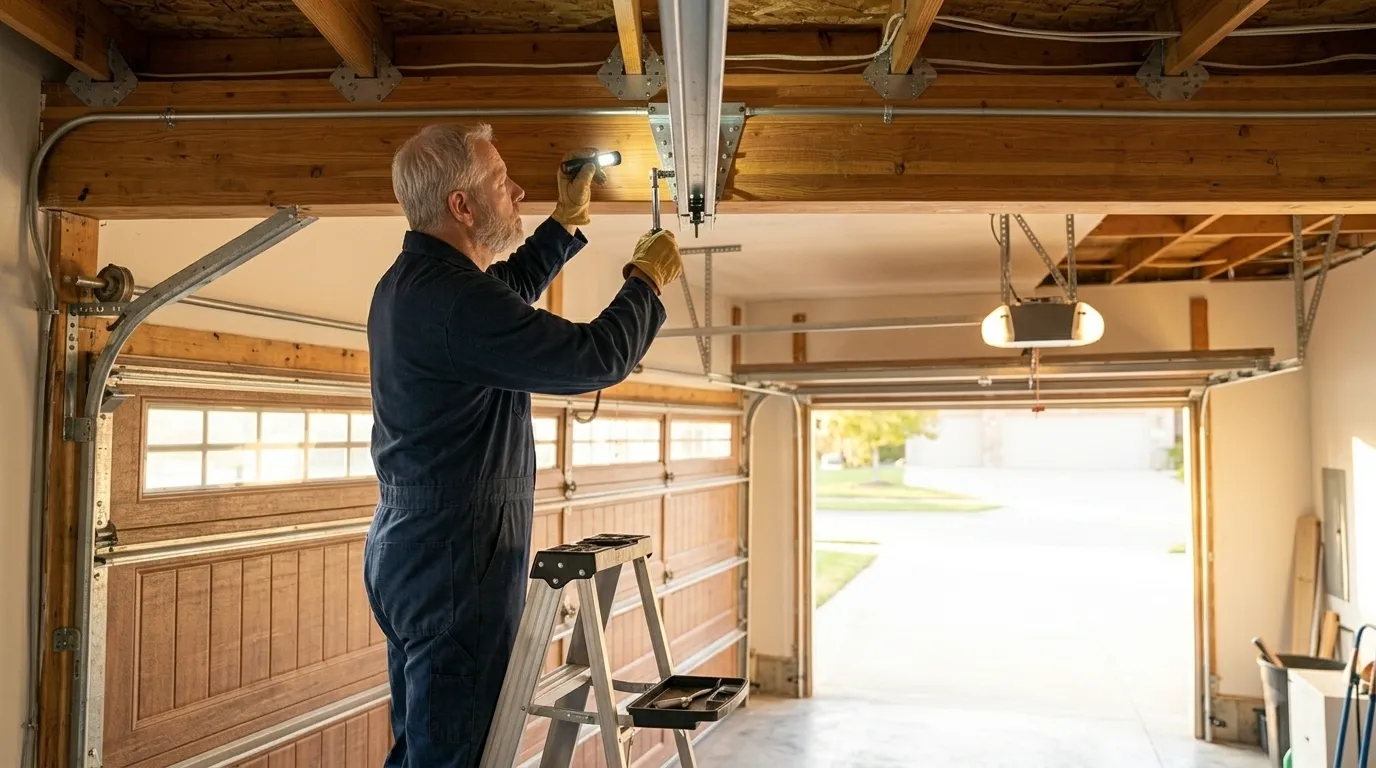
The usual mistake is buying a roll of bottom seal at the hardware store and jamming it into a retainer that was never sized for it. Bloomington's housing stock runs mostly 1956 through 2005, with the bulk of it built in the 1960s and 70s, median year 1973. Doors from that era used a narrower retainer track than what's on the shelf now, so a generic seal either won't seat or pops out after one hard freeze.
The other mistake is treating the door panel itself as the draught source when it's actually the jamb. On a house this age, the wood framing around the opening has usually shifted a little over five decades, and no amount of new weatherstrip fixes a jamb that's out of square by a half inch. People replace seals two or three times before anyone checks whether the track and framing are still parallel.
We won't sell you a seal kit for a door where the real problem is a warped jamb or a sagging header. If that's what's happening, seal replacement is a band-aid, and we'll say so before we take the job.
What Local Conditions Do
Bloomington sits in a cold moderate climate band. That means real freeze-thaw cycling through the winter months, not one hard cold snap and done.
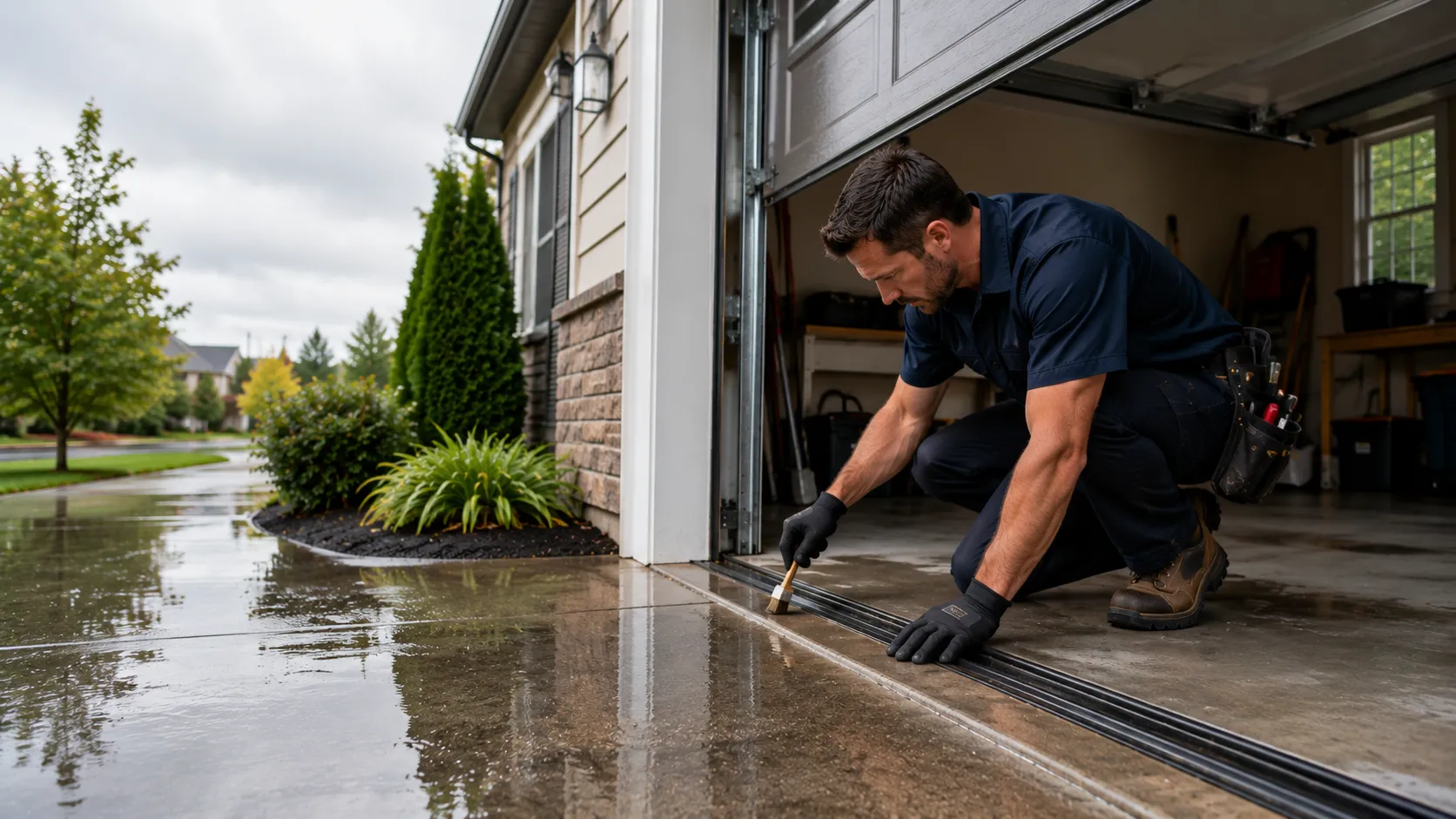
Rubber and vinyl weatherstrip contracts hard in a deep freeze and then swells back when temperatures climb above freezing, sometimes within the same week. Over a normal Minnesota winter that seal material goes through this cycle dozens of times.
On a door installed when this neighborhood was built, that seal has already done thirty or forty winters of that flexing. It doesn't fail all at once.
It develops a permanent set, flattens along the bottom edge, and stops closing the gap even when it looks intact. That's why a seal can look fine to the eye and still let a draught of cold air along the slab in January.
The astragal at the bottom and the vinyl retainer along the sides age at different rates too, since the bottom one takes direct contact with snowmelt and road salt tracked in on tires while the side seals mostly deal with air movement. So it's common to need one and not the other, which is worth checking separately rather than replacing the whole set on a guess.
What Is Going On
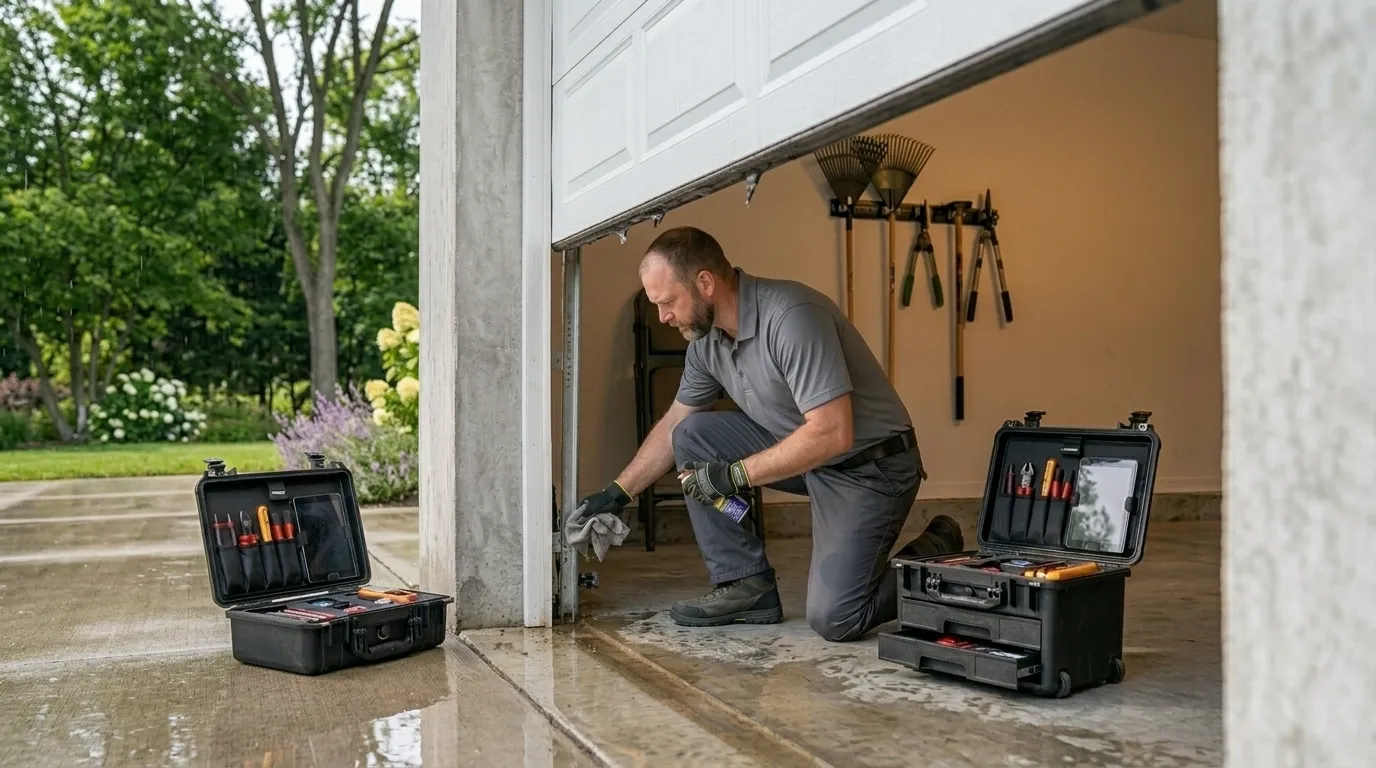
With housing here concentrated in that 1960s-70s window, a lot of these garages were built with steel doors on tracks that predate the wider seal channels used since. When a homeowner calls about cold air along the floor, the pattern we see most is original hardware paired with a seal that's been swapped once, sometime in the last decade, with a size that's close but not exact.
A close-but-not-exact seal looks fine from inside the garage. It's only when you crouch down at the slab on a cold morning that you feel the gap. The retainer groove holds the seal loosely, it shifts when the door cycles, and cold air finds the path of least resistance along the low points of the concrete.
Across a service area with over 107,693 owner-occupied houses, most built in that same stretch of decades, this is not a rare complaint. It's the seasonal norm for houses of this vintage, and it shows up as the same call pattern each year once temperatures drop and hold below freezing for more than a few days running.
When to Call Someone
Call if you can see daylight along the bottom of a closed door, or if you feel moving air at floor level on a still day. That's not something a can of spray foam around the frame fixes for good, since the seal itself is the part doing the sealing job, not the gap around it.
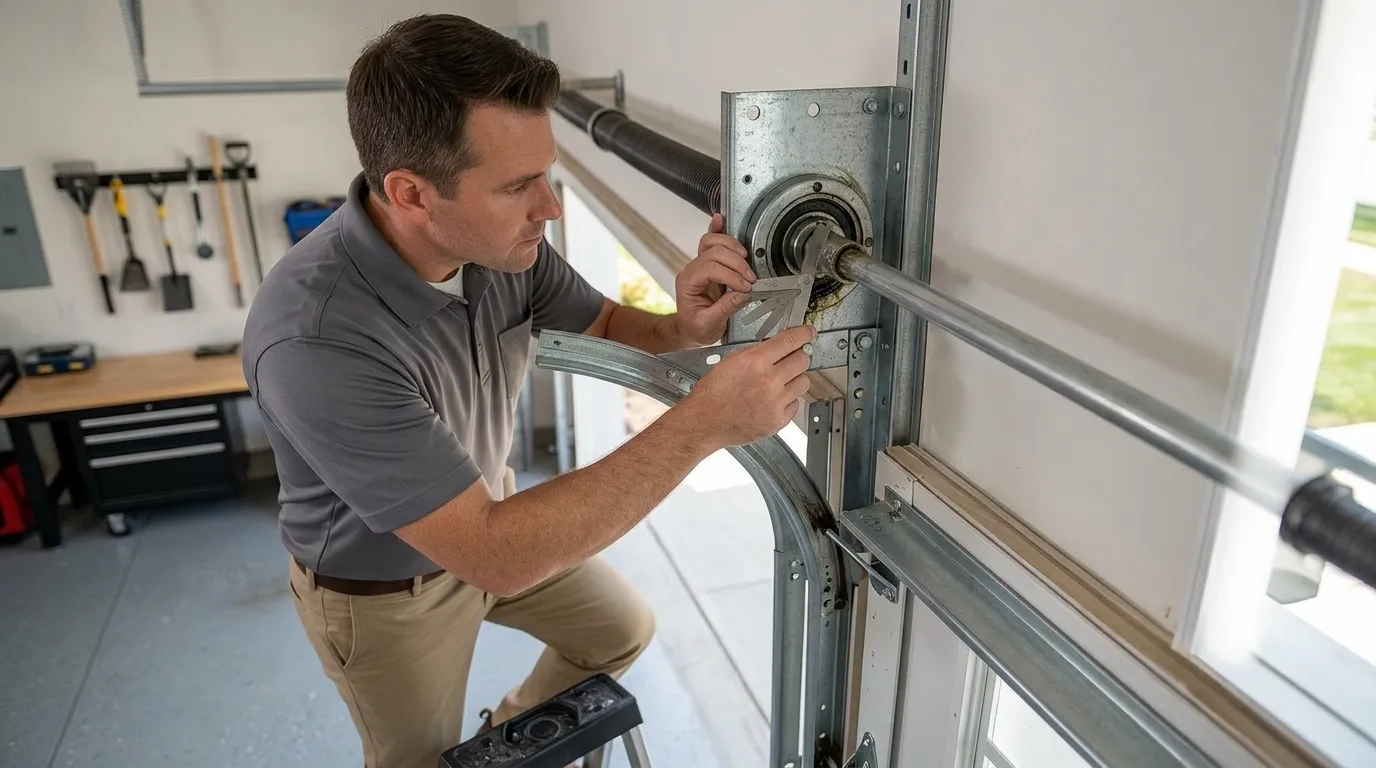
If the door is original to a house built in that 1956-1973 range and the track hardware looks original too, it's worth having someone actually measure the retainer channel before buying a seal off a shelf. A seal that doesn't match the channel width will always leave a draught no matter how new it is.
We don't recommend seal replacement on a door where the panel itself is rusted through at the bottom edge or where the track is bent. In that case the seal is the least of the problem and money spent on it is wasted before the door is even opened again. That's a replacement conversation, not a weatherstrip one.
How We Can Help
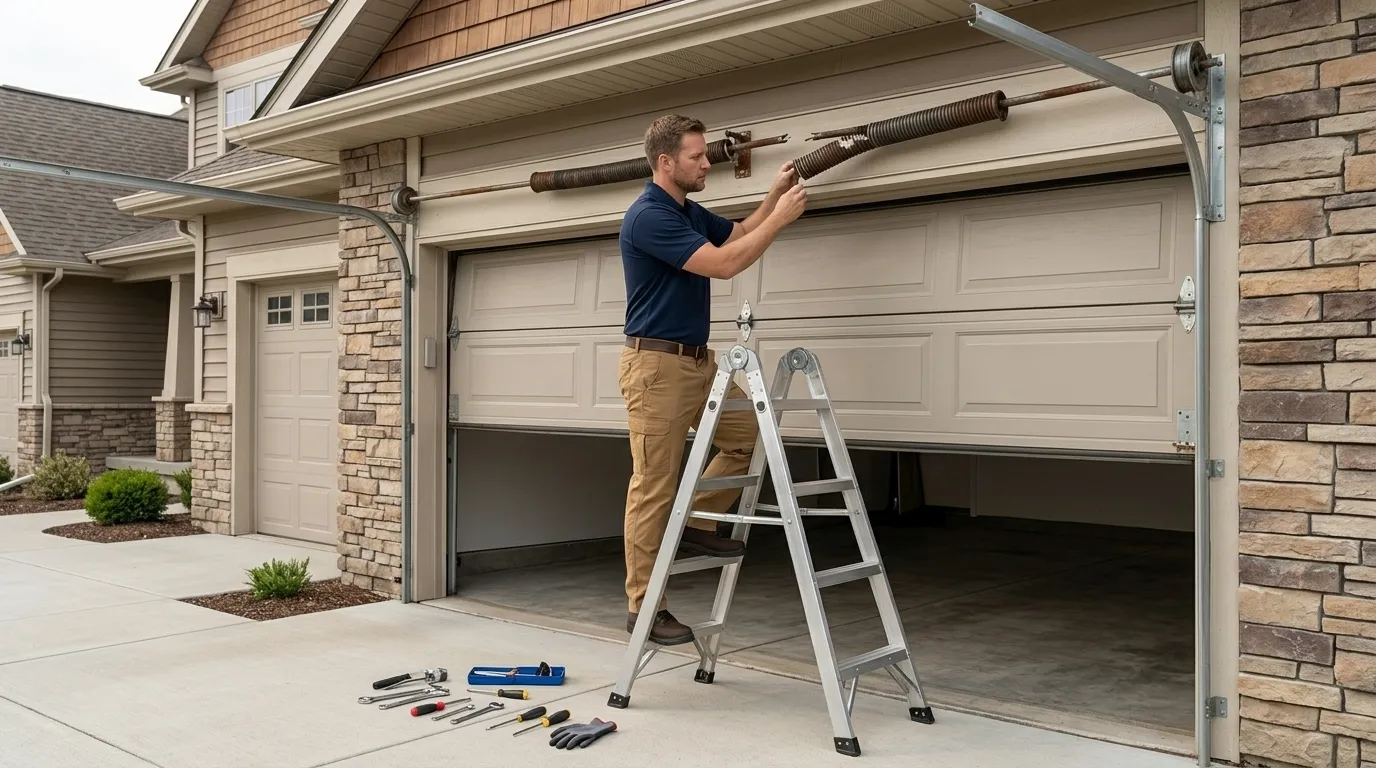
Garage Door Repair
Springs, cables, tracks, rollers, and openers fixed by a tech who explains the problem before touching anything.
Learn more →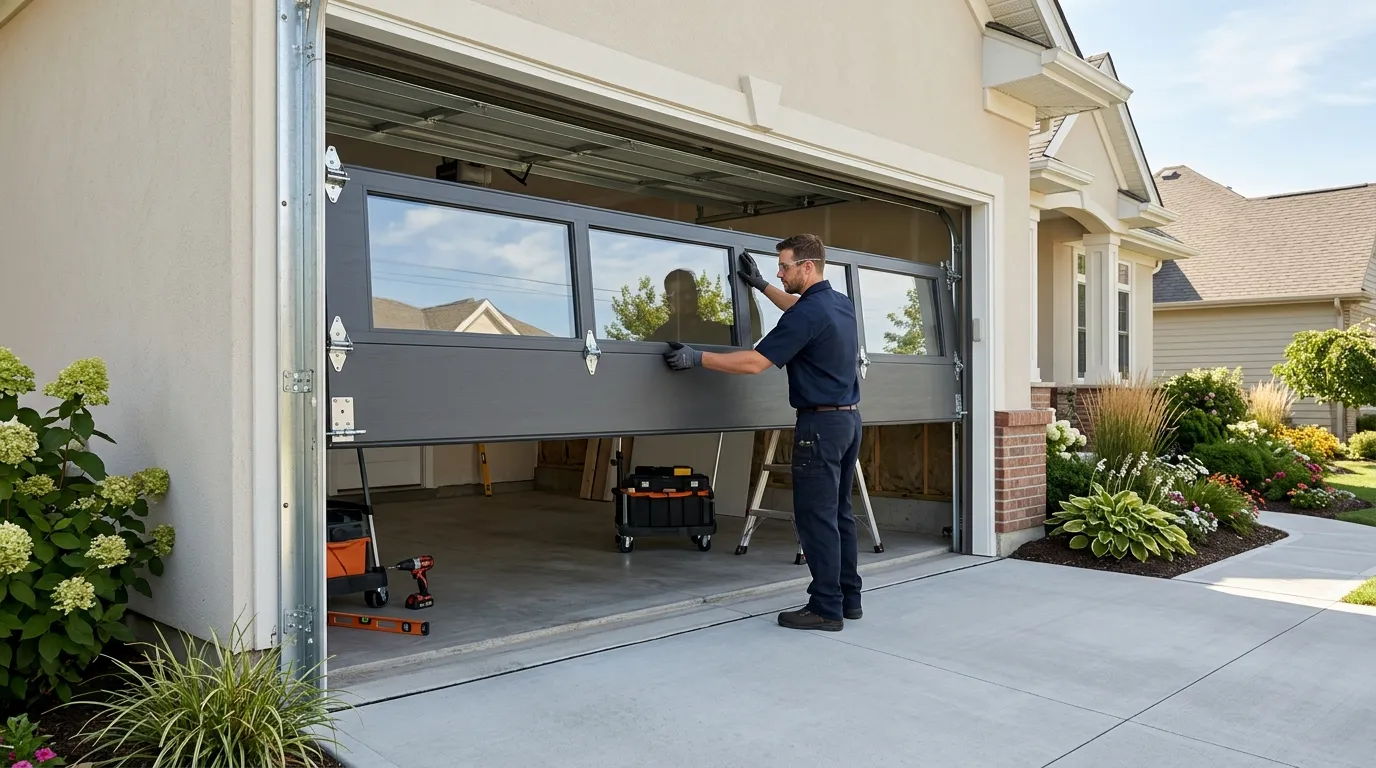
Garage Door Installation
New sectional doors sized and installed for the housing stock actually built in this area.
Learn more →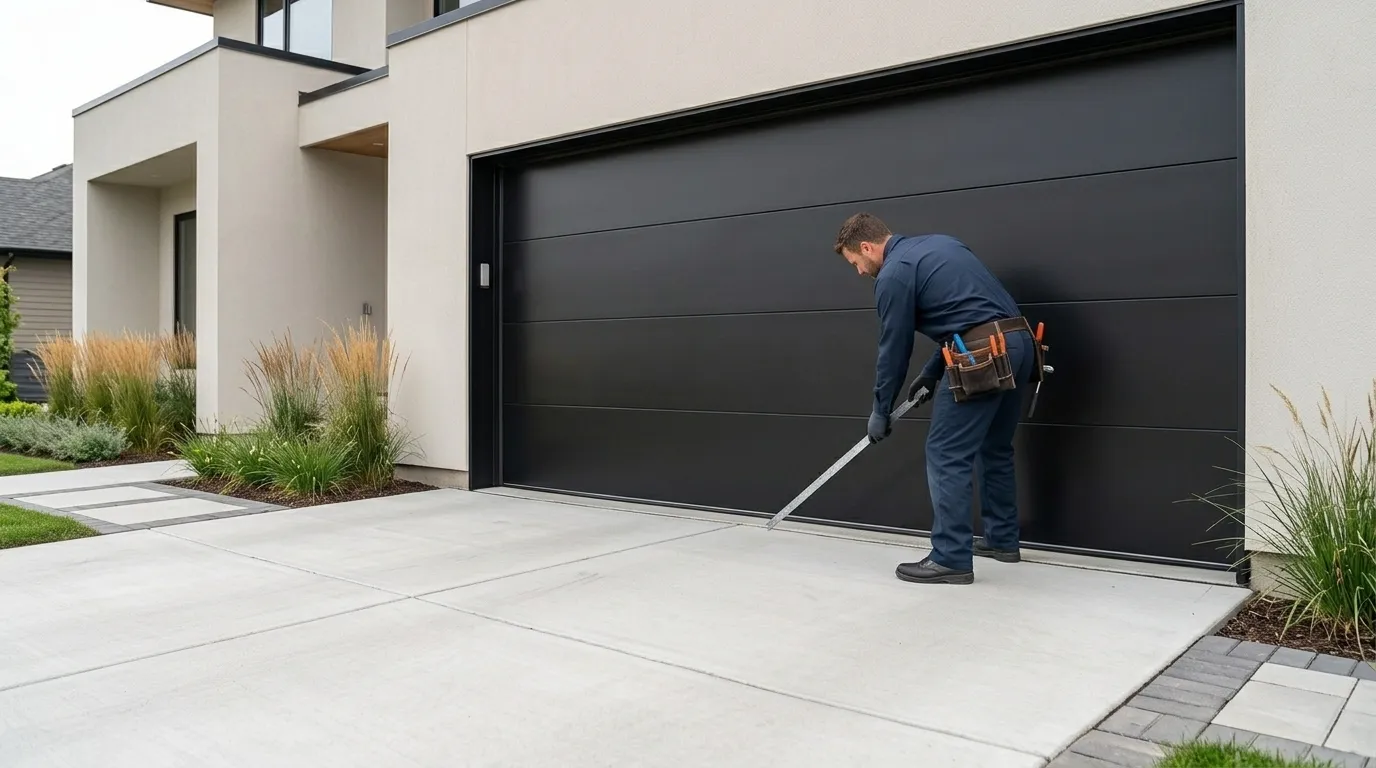
Garage Door Service
Tune-ups, lubrication, and safety checks that catch a small problem before it becomes a service call.
Learn more →Frequently Asked Questions
Why does my garage door only draught in winter?
Weatherstrip contracts in deep cold and loses contact with the slab or jamb, then swells back when it warms up. Bloomington's cold moderate climate puts seals through that cycle repeatedly each winter, and older material that's already flattened from decades of use stops closing the gap even though it looks intact.
Will any bottom seal fit my older door?
Not always. A lot of Bloomington garages date to the 1960s and 70s, when retainer channels were narrower than what's commonly sold today. A seal that's close in size but not exact will sit loosely and still let cold air through, even though it looks like a proper fix from a distance.
Is a draughty door always a seal problem?
No. On houses from this era the wood framing around the opening has sometimes shifted over the decades, and a seal can't compensate for a jamb that's out of square. We check the frame and track before recommending a seal, since replacing weatherstrip on a warped jamb just means doing it again next year.
Have a Door That Needs a Second Opinion?
Call and describe what it is doing - we will tell you what it likely is.