
Bloomington, MN
Bloomington Garage Door Guide
Why Your Garage Door Jumped the Track
Bloomington's 1960s-70s housing stock and cold winters push garage door tracks out of alignment in specific ways. Here's what's actually happening and when to call.
- Licensed & Insured
- Same-Area Service Calls
- Upfront Pricing
Where People Go Wrong
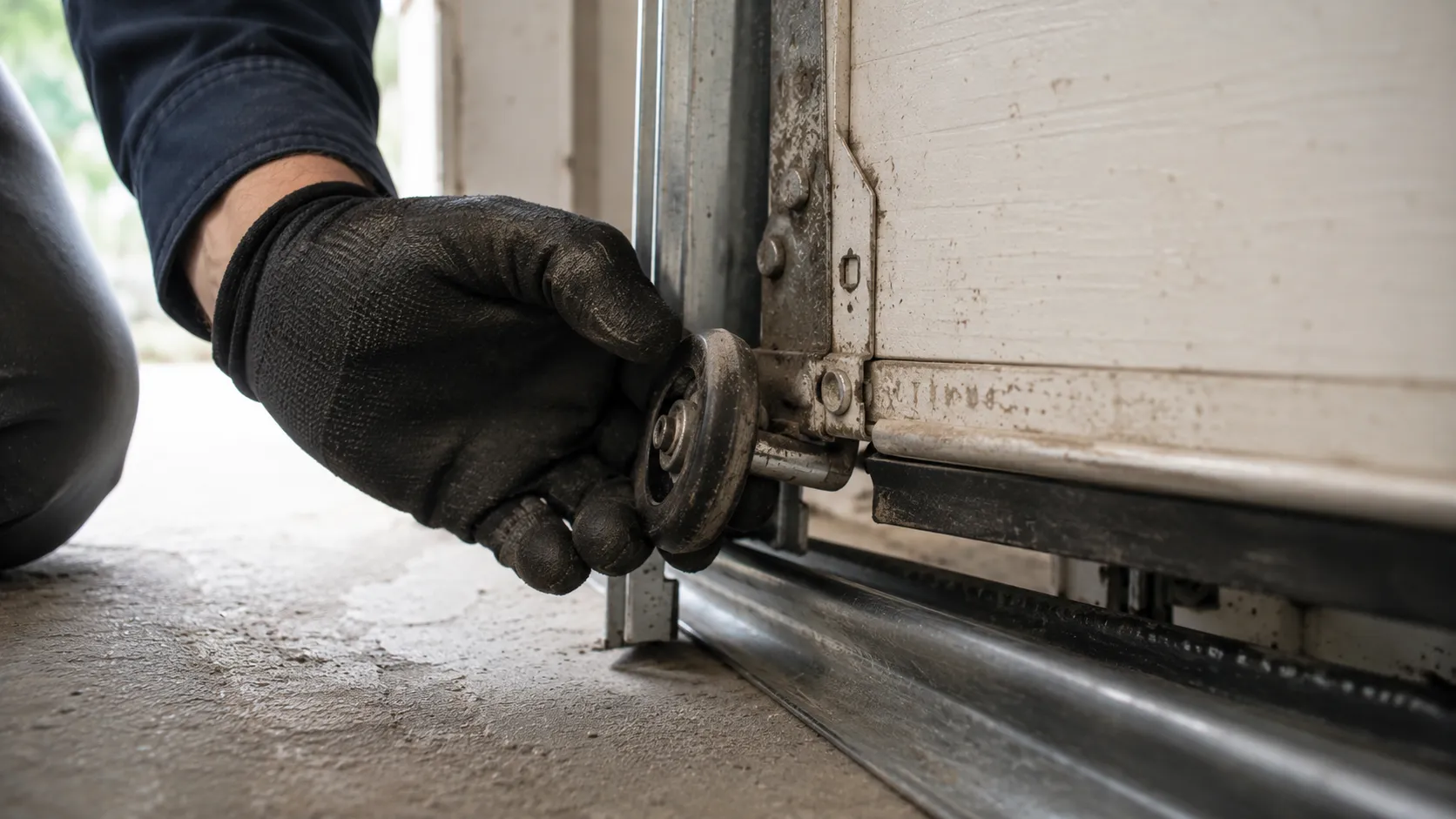
The first mistake most Bloomington homeowners make is assuming a door that's rattling or binding on one side just needs a squirt of oil. Most of the housing here went up between 1956 and 2005, with the bulk of that stock - across the 43 named areas that make up this city - dating to the 1960s and 1970s.
That means a lot of original track brackets are still lag-bolted into framing that's pushing sixty years old. Oil doesn't fix a bracket that's worked loose in wood that's shrunk and re-shrunk through fifty-some winters.
The second mistake is forcing the door. If a panel is riding up out of the track and someone hits the wall button anyway, the opener will keep pulling until something bends - usually the track itself, sometimes the roller stem. In West Bloomington, just southwest of the center, and out toward the South Loop District to the northeast, we see the same pattern: houses from that same building wave, tracks bent from being run while off-plumb rather than stopped and reset.
The third mistake is treating a rolled-out cable as a track problem. It looks similar - the door hangs crooked - but the fix is different, and forcing a track adjustment on a cable issue makes it worse.
What Local Conditions Do
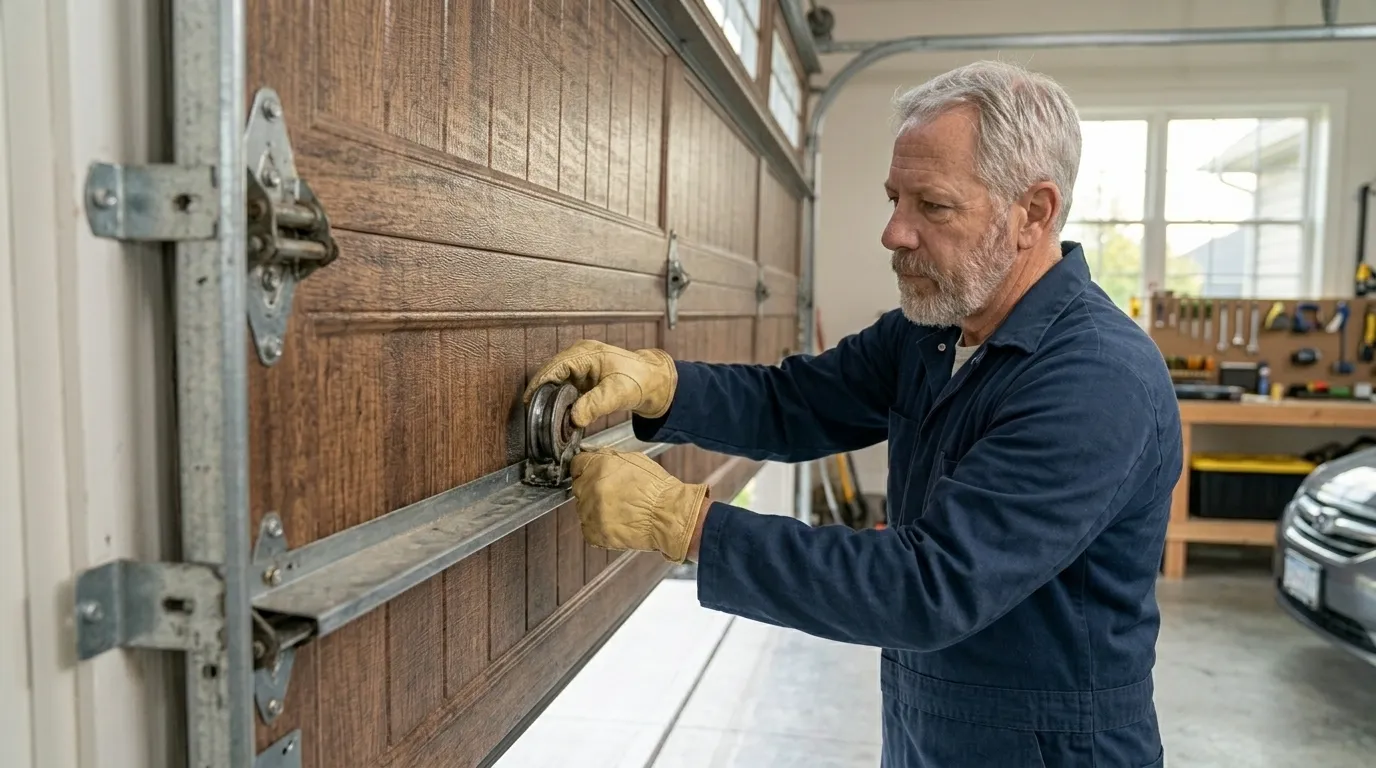
Bloomington sits in a moderate-cold climate band, and that matters more for track alignment than most people expect. Steel track contracts in cold and expands in heat, and it's fastened to wood jambs that move on their own seasonal schedule. In houses built in the 1960s and 70s - which is most of them here - those jambs have gone through decades of freeze-thaw cycling.
The wood has settled, twisted slightly, or the studs have dried and shrunk a fraction of an inch. A fraction is enough. A track that was plumb in 1973 is not necessarily plumb now.
This shows up as a door that runs fine most of the year and starts binding or rattling once the cold really sets in, because the metal-to-wood tolerance that was fine in August is tight in January. It's not a coincidence that track calls cluster with the first hard cold snap. The bracket was already marginal; the cold just closed the gap.
What Is Going On
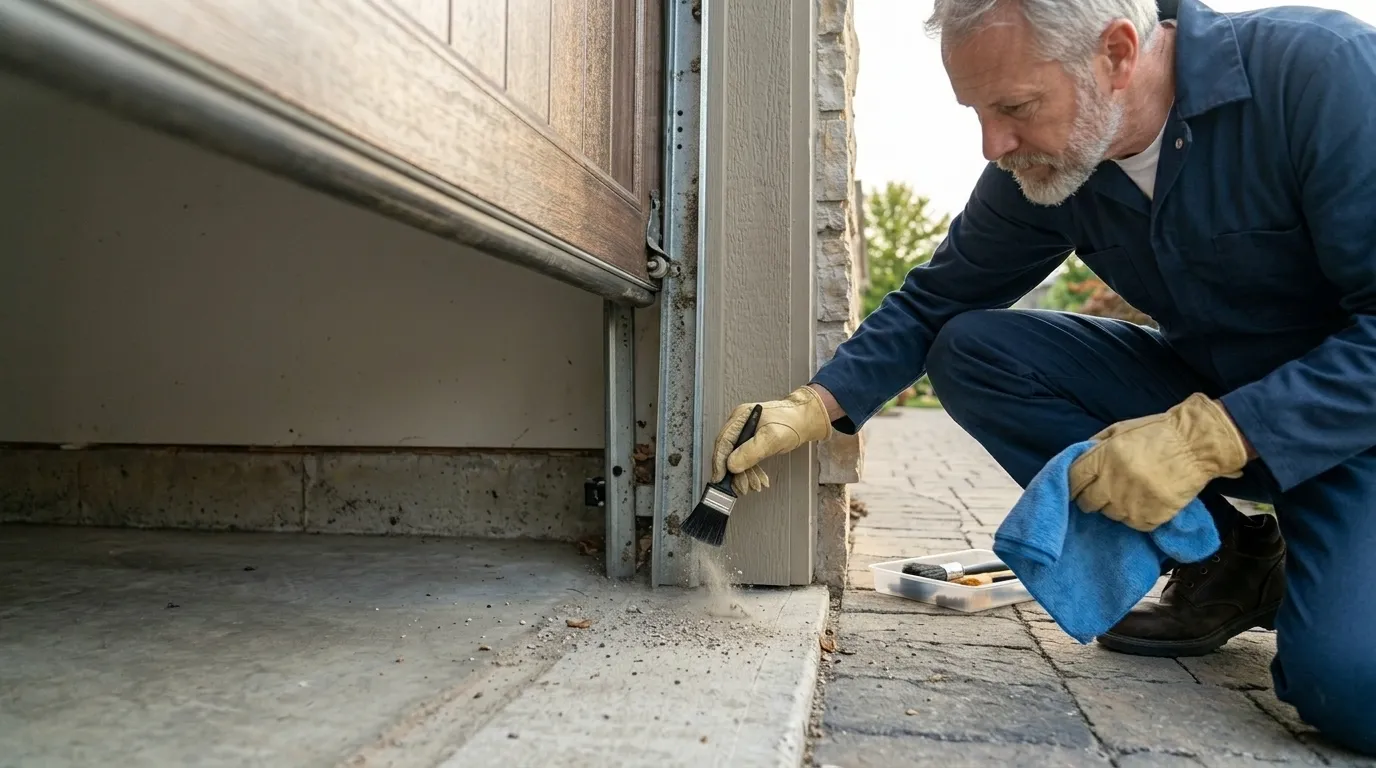
When a door is actually off track, one of three things has happened. The bracket holding the track to the jamb has pulled loose - common in the older framing found across this city's 1960s-70s stock, where the original fasteners were sized for lighter doors than what's often installed now.
The track itself has been bent, usually from a car bumper, a door forced while binding, or ice built up at the bottom of the track deforming it. Or a roller has worn down or cracked and dropped out of the channel, letting that corner of the door sag.
A cracked or worn roller is the cheapest of the three to deal with. A bent track section usually gets replaced rather than bent back - bent steel doesn't hold alignment even after you straighten it, so re-bending is a temporary fix at best. A pulled bracket means opening up the question of what the jamb underneath looks like, because if the wood itself has punky spots from decades of moisture, a new bracket in the same holes will pull loose again.
When to Call Someone
Call before you run the opener again if the door is visibly crooked, if you hear a scrape or grind partway through the cycle, or if one corner looks like it's sitting lower than the other. Running it anyway is how a bent track becomes a bent track plus a torn cable plus a cracked panel.
One honest limit: we don't straighten badly bent track sections and call it done. Once steel has kinked, it's lost its temper at that point and will not hold plumb the way new track will, even if it looks fine standing in the garage. We'll tell you when a section needs replacing instead of bending back, even though replacing costs more up front - it's the only version of the fix that lasts.
How We Can Help
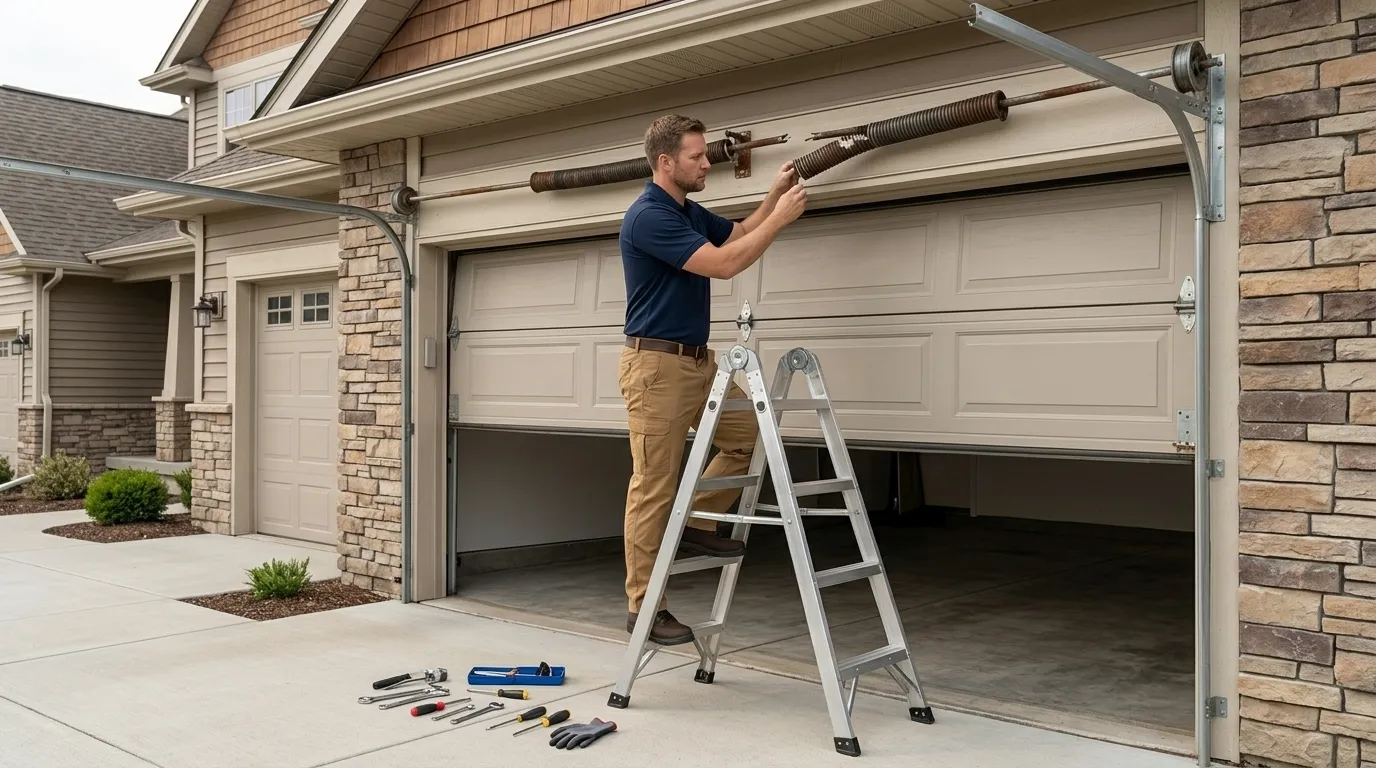
Garage Door Repair
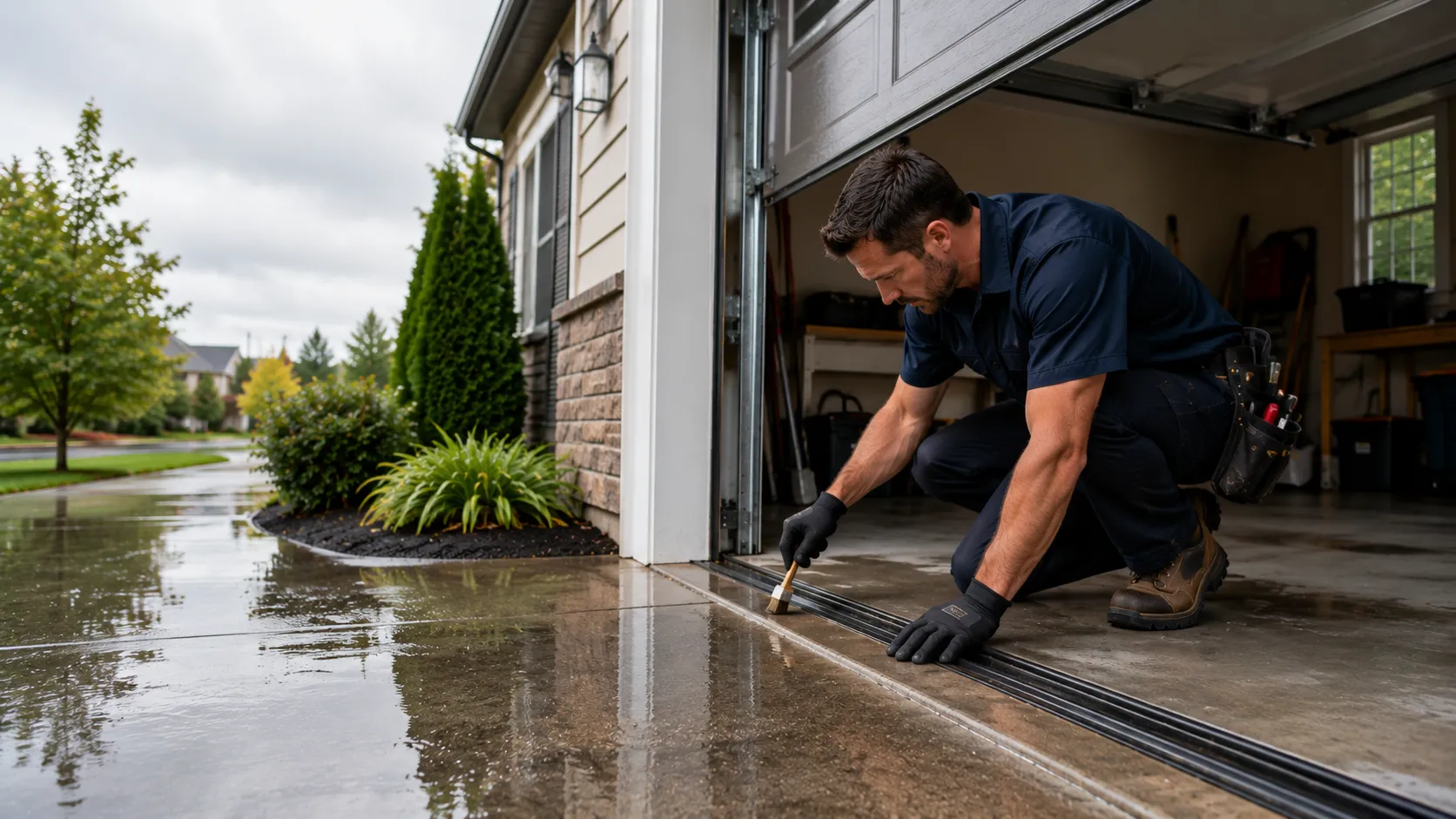
Springs, cables, tracks, rollers, and openers fixed by a tech who explains the problem before touching anything.
Learn more →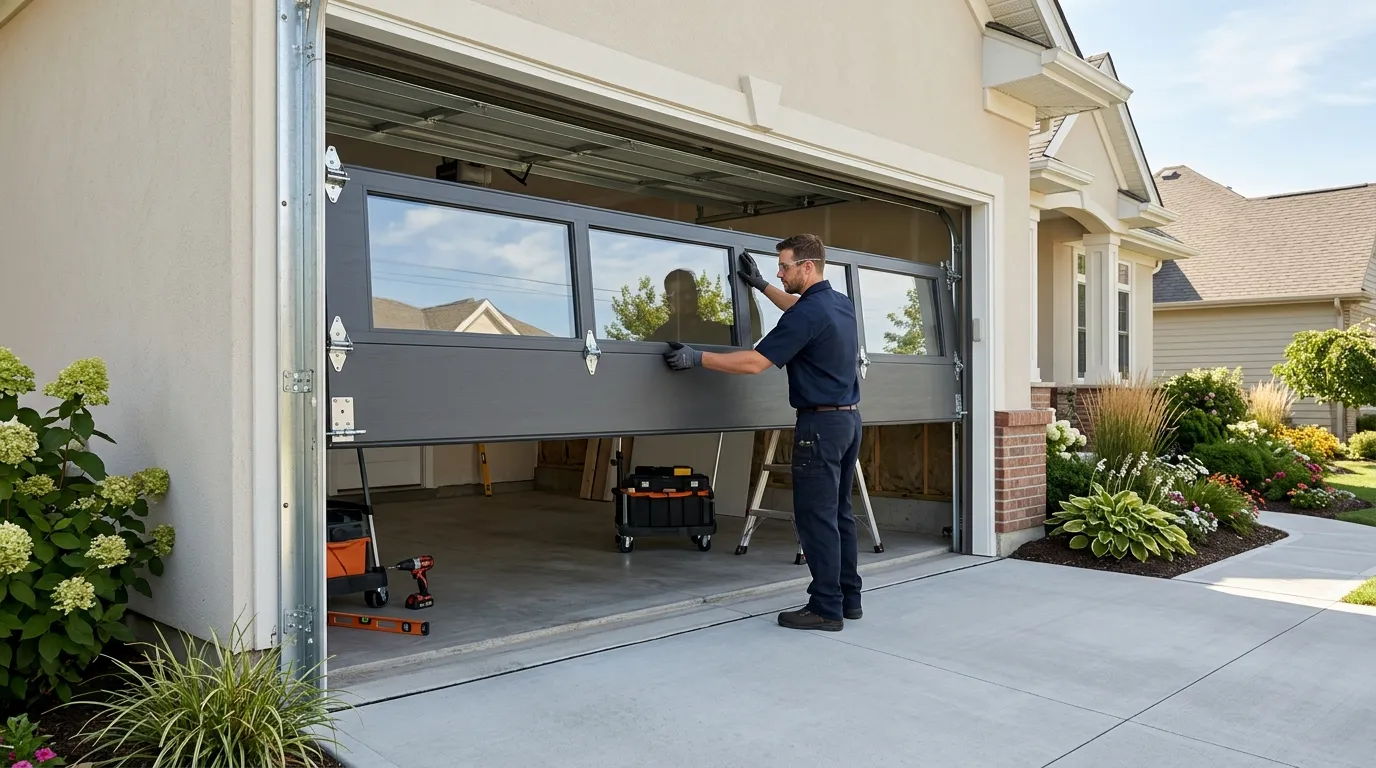
Garage Door Installation
New sectional doors sized and installed for the housing stock actually built in this area.
Learn more →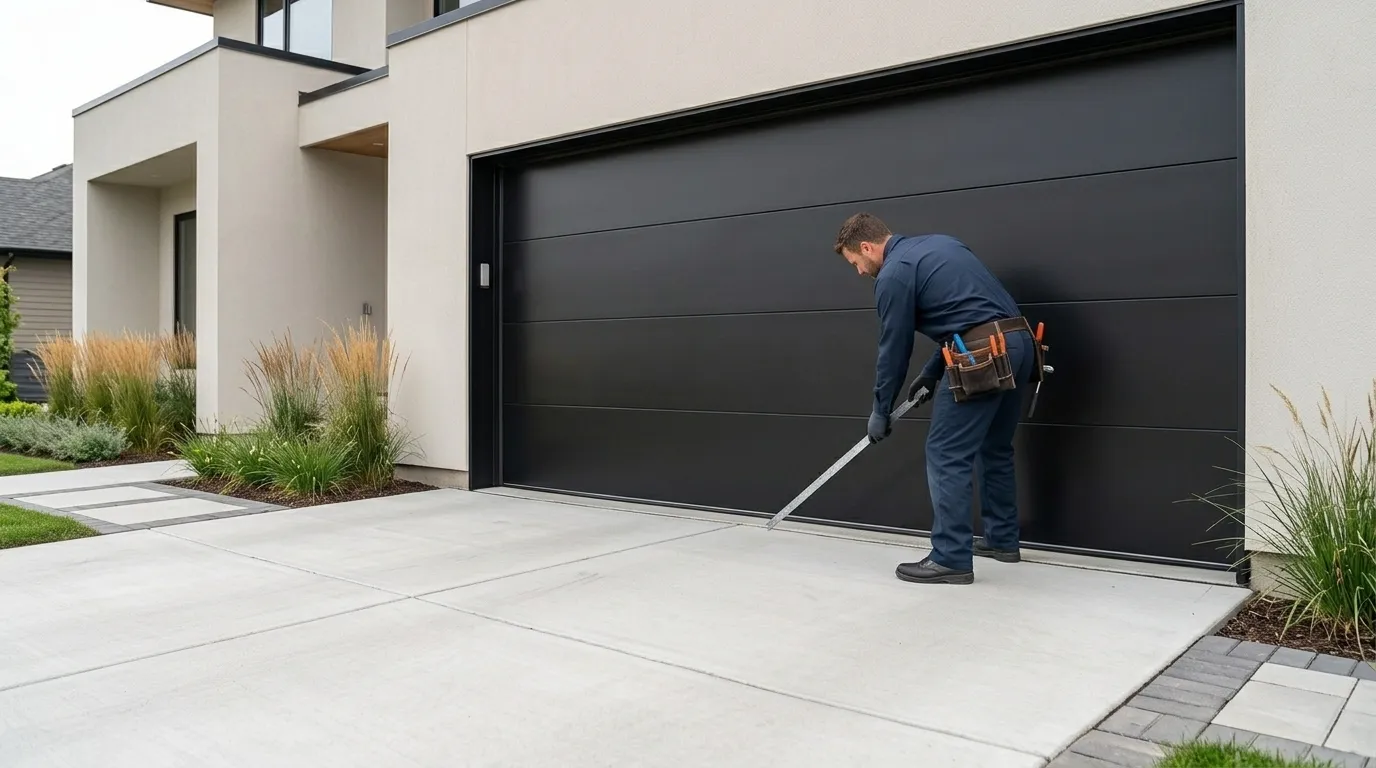
Garage Door Service
Tune-ups, lubrication, and safety checks that catch a small problem before it becomes a service call.
Learn more →Frequently Asked Questions
Why did my garage door come off track all of a sudden in winter?
Cold makes steel track contract while the wood jamb it's bolted to has its own seasonal movement. In houses from Bloomington's common 1960s-70s building era, decades of that cycle can leave brackets marginal, so the first hard cold snap is often what finally pulls one loose.
Can I push a garage door back onto the track myself?
We wouldn't recommend it. The track is under tension from the door's weight and often the spring system too, and forcing it back into place by hand risks a cable snapping or a panel bending further. It's a job for someone who can release the tension first.
Is a bent track always worth fixing, or should I replace the door?
A bent section of track almost always gets replaced rather than repaired, since kinked steel won't hold alignment. Whether the whole door is worth replacing depends on its age and condition beyond the track - something worth looking at in person rather than guessing over the phone.
Have a Door That Needs a Second Opinion?
Call and describe what it is doing - we will tell you what it likely is.