
Bloomington, MN
Bloomington Garage Door Guide
Why Cold Weather Snaps Springs on Bloomington Garage Doors
Bloomington homes built mostly in the 1960s-70s see torsion springs fail hardest in cold snaps. Here's what actually goes wrong and when to call.
- Licensed & Insured
- Same-Area Service Calls
- Upfront Pricing
Where People Go Wrong
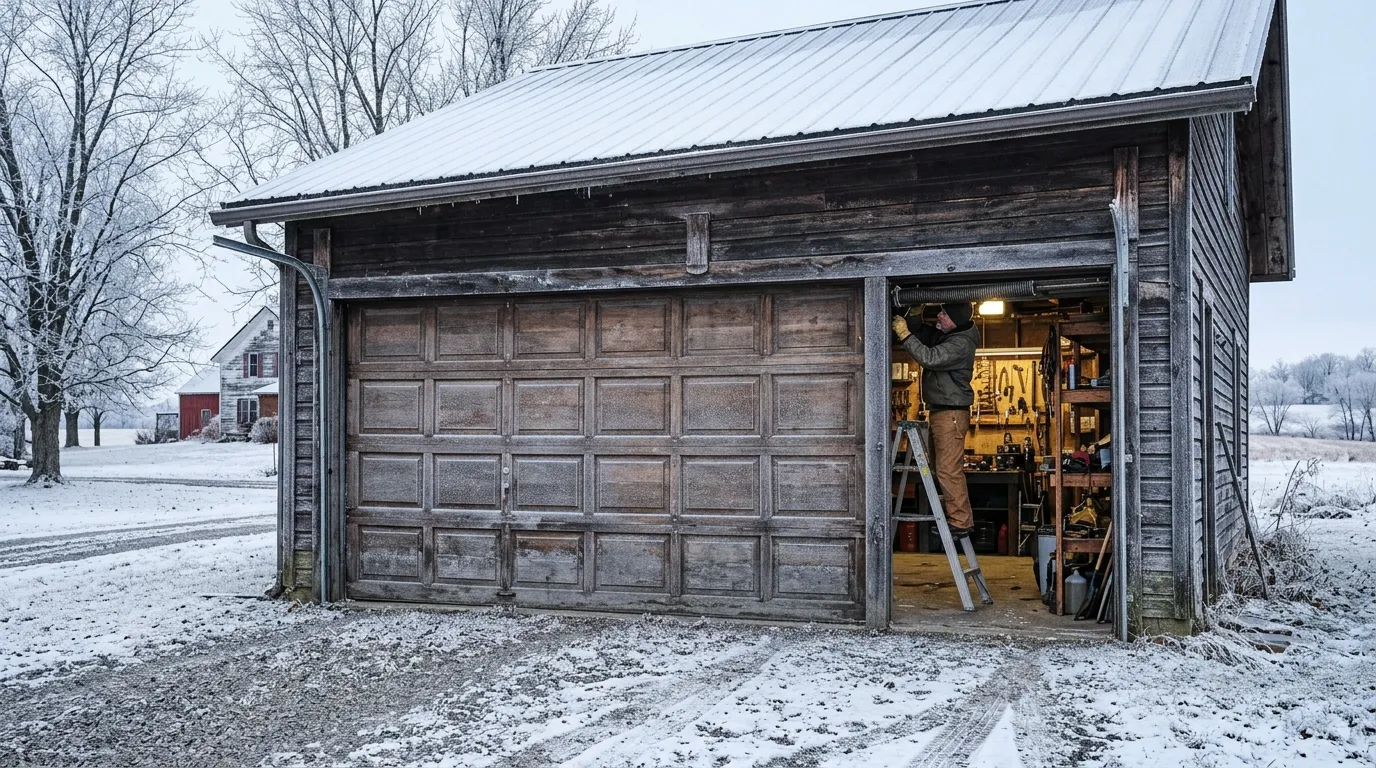
The mistake we see most is someone hearing a bang in the garage on a cold morning, finding the door won't budge, and assuming the opener died. It's almost never the opener. On a house from the median build era around here - 1973, per the housing data for this area - the torsion spring is original or a first replacement, and steel that's flexed for decades gets brittle exactly when the temperature drops.
People also try to force the door with the opener still engaged, which strips the gear or bends the track, turning a spring job into a bigger bill. Another common error: assuming a broken spring means a broken door. Springs, cables, and the door panel are separate systems.
A snapped spring doesn't mean the panels are damaged, but running the opener against dead weight while it's still connected can bend the top section or pull the cable off the drum. If you hear that bang, the right first move is to leave the door alone and unplug the opener, not to keep pressing the button to see if it'll move.
What Local Conditions Do
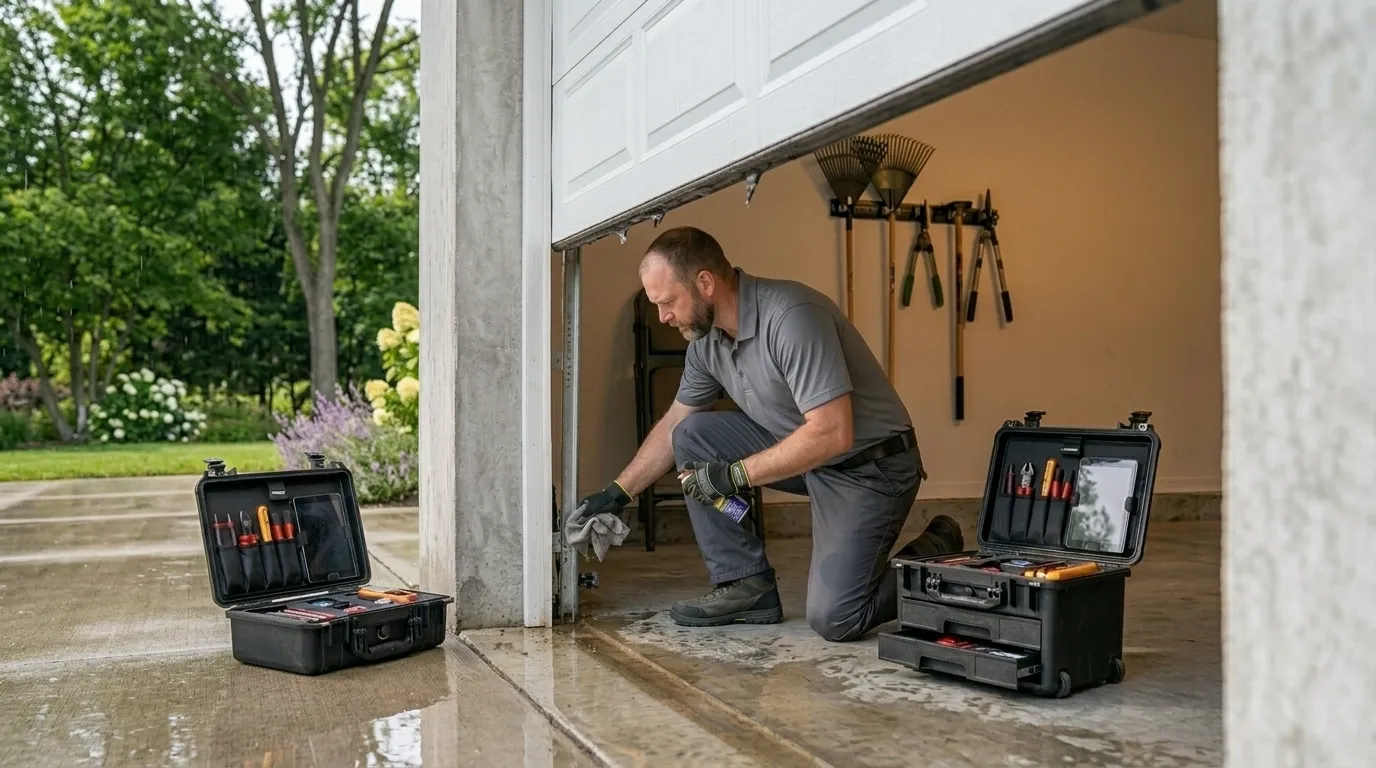
This area sits in a cold moderate climate band, which means winters bring sustained stretches below freezing rather than occasional dips. Steel torsion springs lose tensile flexibility as they cool, and the wire fatigues faster with each freeze-thaw cycle than it would in a milder climate. That's a metallurgical fact, not a maintenance failure - you can lubricate a spring every season and it will still eventually give out on a cold morning, because the cold is doing the work, not neglect.
Garages here also see wider swings between an unheated overnight low and a sun-warmed afternoon, and that expansion-contraction cycle adds stress to both the spring coil and the end brackets holding it to the wall. Housing stock across this service area is mostly 1960s-70s construction spread over more than forty named neighborhoods, and a lot of those garages were built without insulation or a heated slab, so the spring sees close to outdoor temperature swings even though it's technically indoors. None of this means the door is failing you.
It means the physics of a cold snap and a 50-year-old spring design line up in a predictable way.
What Is Going On
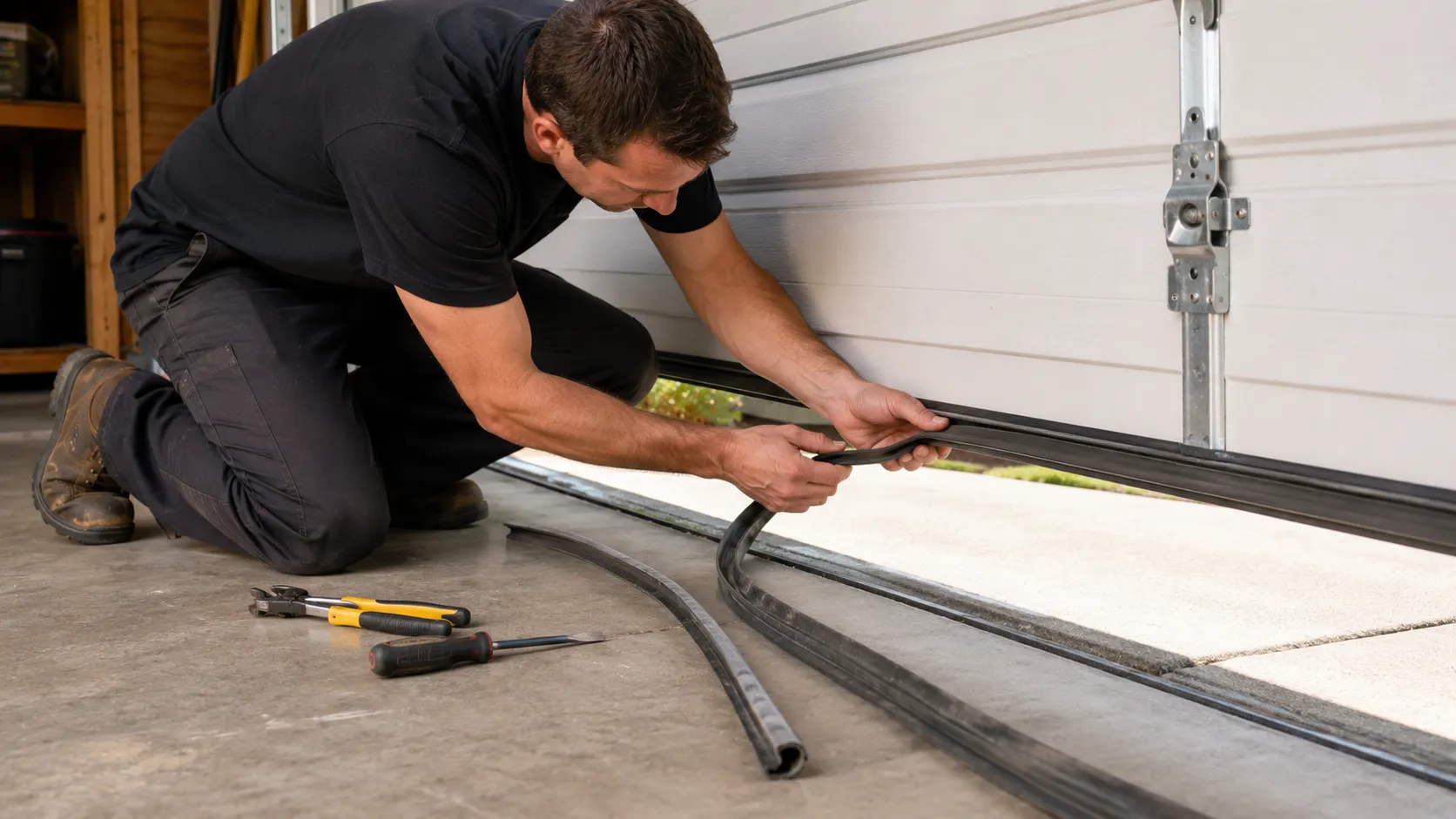
When a spring goes in cold weather, it's usually a straightforward fatigue failure: the coil has flexed tens of thousands of times over its life, and the cold makes the final crack happen on a specific morning rather than gradually. You'll hear it - a loud pop, sometimes described as a gunshot - and the door will feel heavy or refuse to lift, because the spring's job is to counterbalance the weight of the panels. On the older end of the housing stock here, built when torsion hardware was less standardized, you may also find a spring size or wind direction that doesn't match anything on a common parts shelf, which can add a day or two to sourcing the right replacement.
That's the honest limitation: we can diagnose the failure same-visit, but if your setup uses an older or mismatched spring, getting the exact part in stock isn't always instant. It's worth knowing before you're standing in a cold garage waiting on a door that won't move.
When to Call Someone
Call as soon as you hear the bang or notice the door won't lift evenly - don't keep cycling the opener trying to force it. A broken spring under load is a safety issue, not just an inconvenience: the door is now unbalanced, and cables under tension can whip if they slip off a drum. If your garage sits in one of the older pockets of this service area with hardware that predates common torsion sizing, flag that when you call so the visit can be planned around parts on hand versus parts that need ordering.
If the door still lifts by hand slowly and evenly, that's a good sign the spring failure hasn't taken the cables or track with it, and it's a simpler fix. If it won't move at all, or one side drops lower than the other, leave it shut and get it looked at before using the garage.
How We Can Help
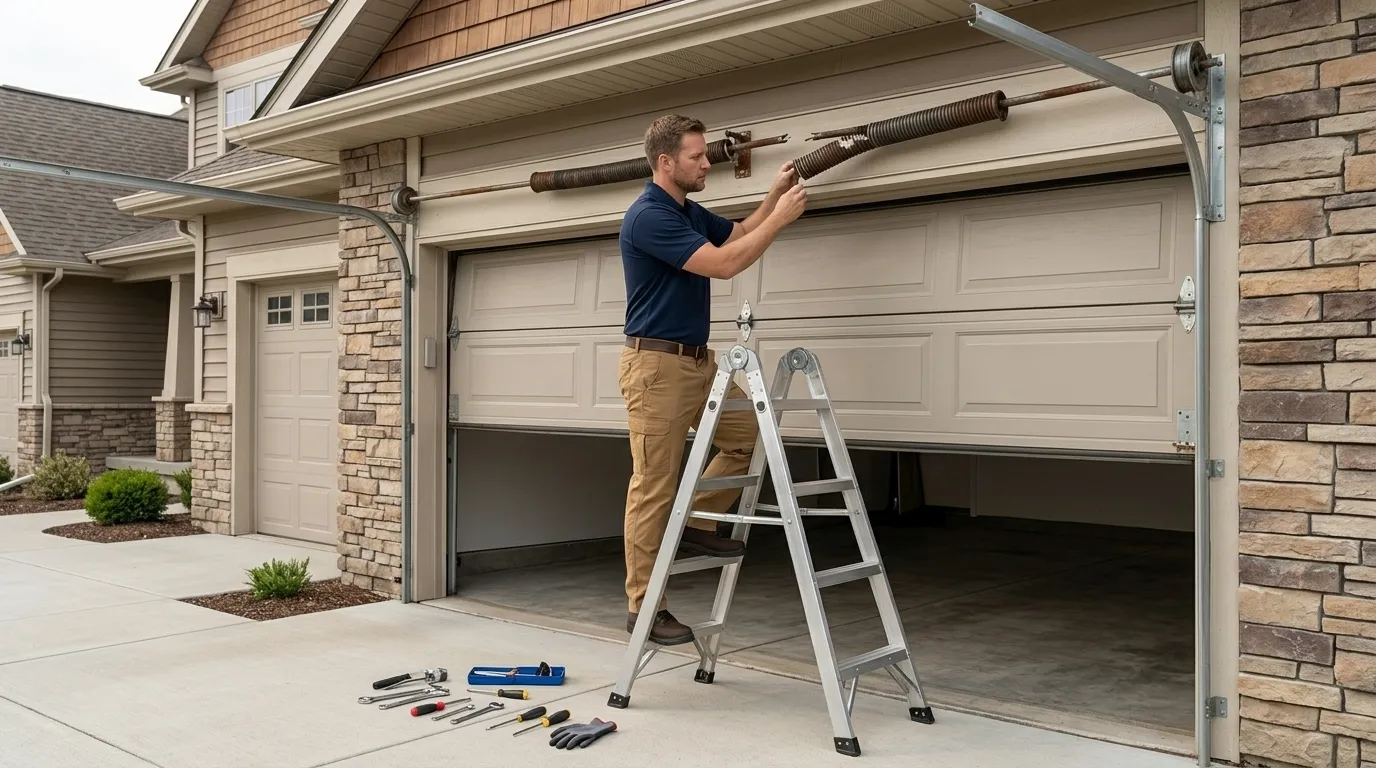
Garage Door Repair
Springs, cables, tracks, rollers, and openers fixed by a tech who explains the problem before touching anything.
Learn more →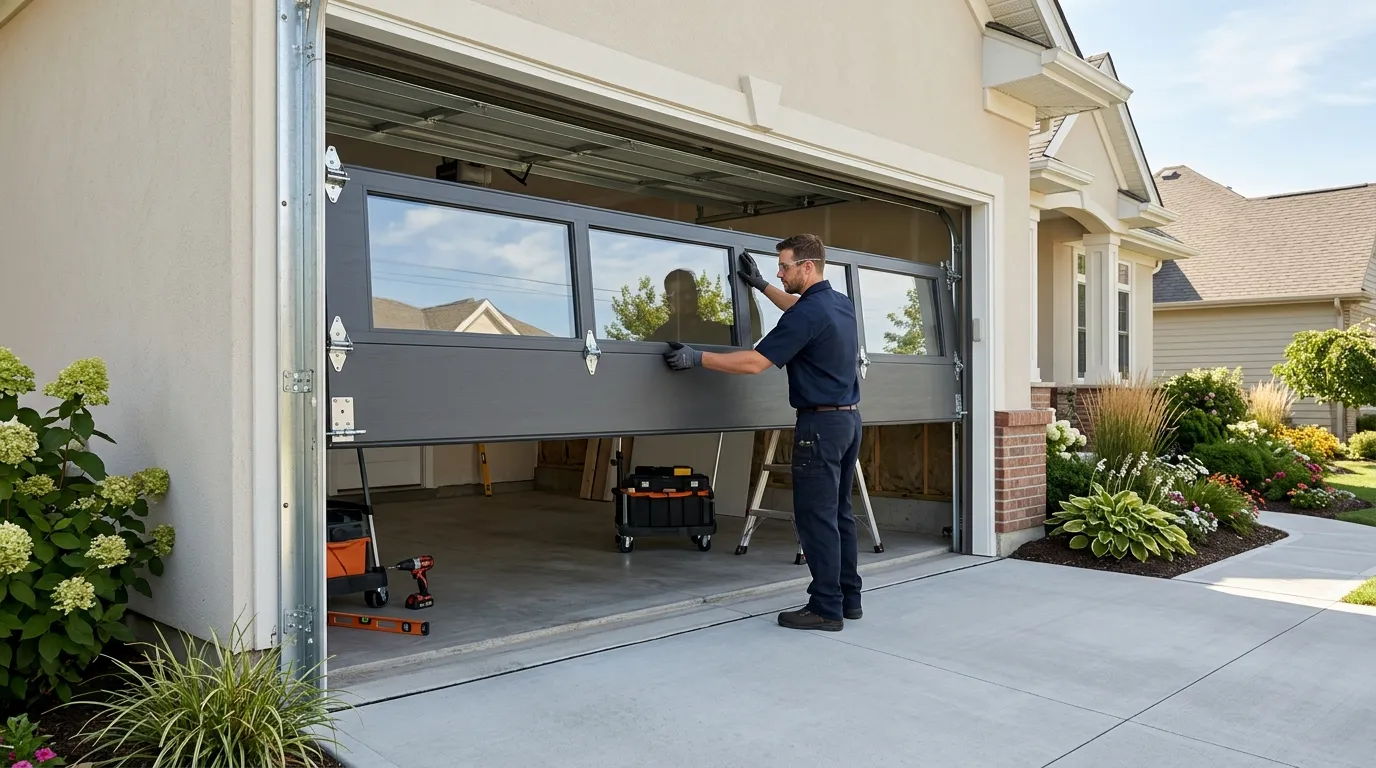
Garage Door Installation
New sectional doors sized and installed for the housing stock actually built in this area.
Learn more →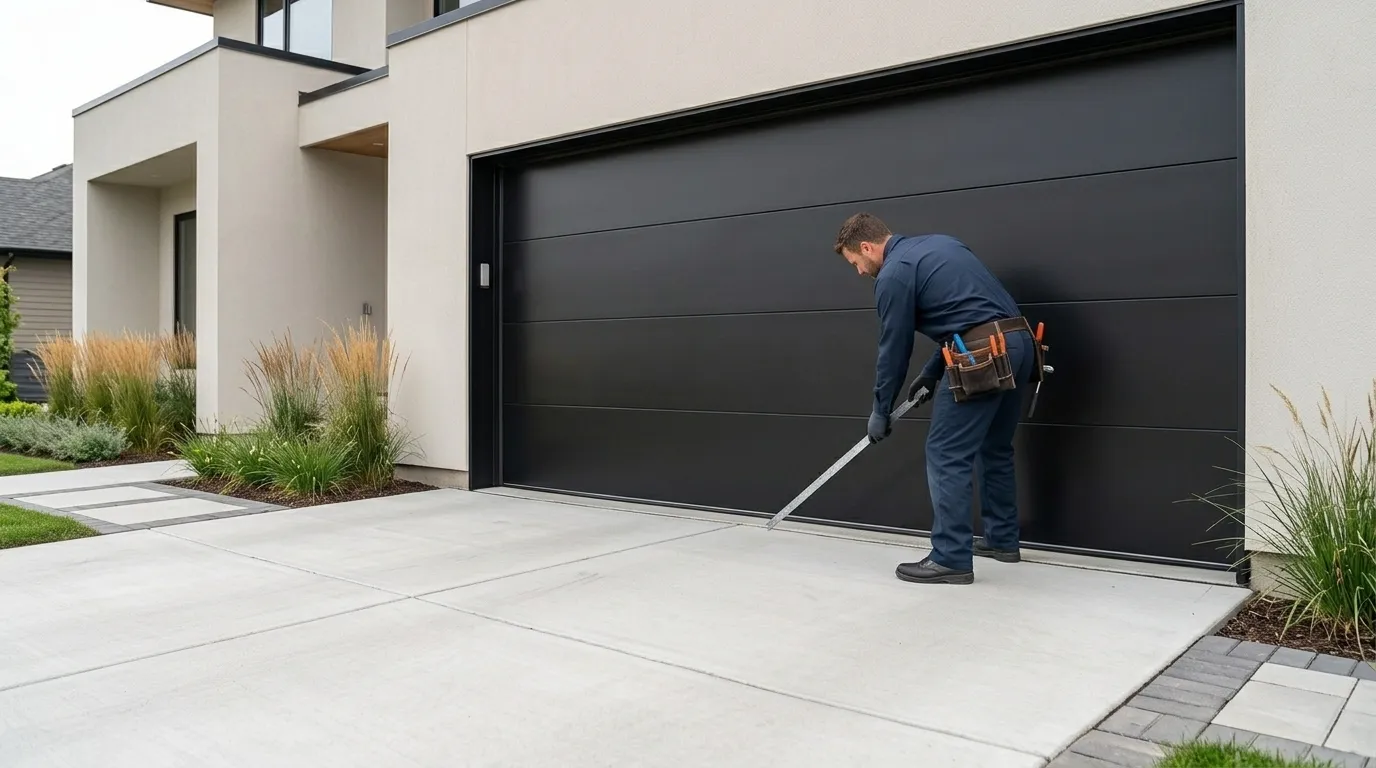
Garage Door Service
Tune-ups, lubrication, and safety checks that catch a small problem before it becomes a service call.
Learn more →Frequently Asked Questions
Why did my spring break on the coldest morning of the year?
Cold doesn't cause the break on its own, but it makes brittle, fatigued steel more likely to fail on that exact day. A spring that's flexed for years through winters like the ones here is already close to its limit, and a hard freeze often supplies the final stress that snaps it.
Is a broken spring dangerous to leave overnight?
It's safe to leave the door closed overnight if it's already down, but don't try to open or close it manually or with the opener. The door is unbalanced without a working spring, and forcing it can bend the track or drop the door suddenly.
Will my spring size be hard to find?
Not usually, but homes with older or non-standard torsion hardware sometimes need a specific size that isn't on every truck. We'll tell you at diagnosis whether it's an on-hand fix or a short parts wait.
Have a Door That Needs a Second Opinion?
Call and describe what it is doing - we will tell you what it likely is.